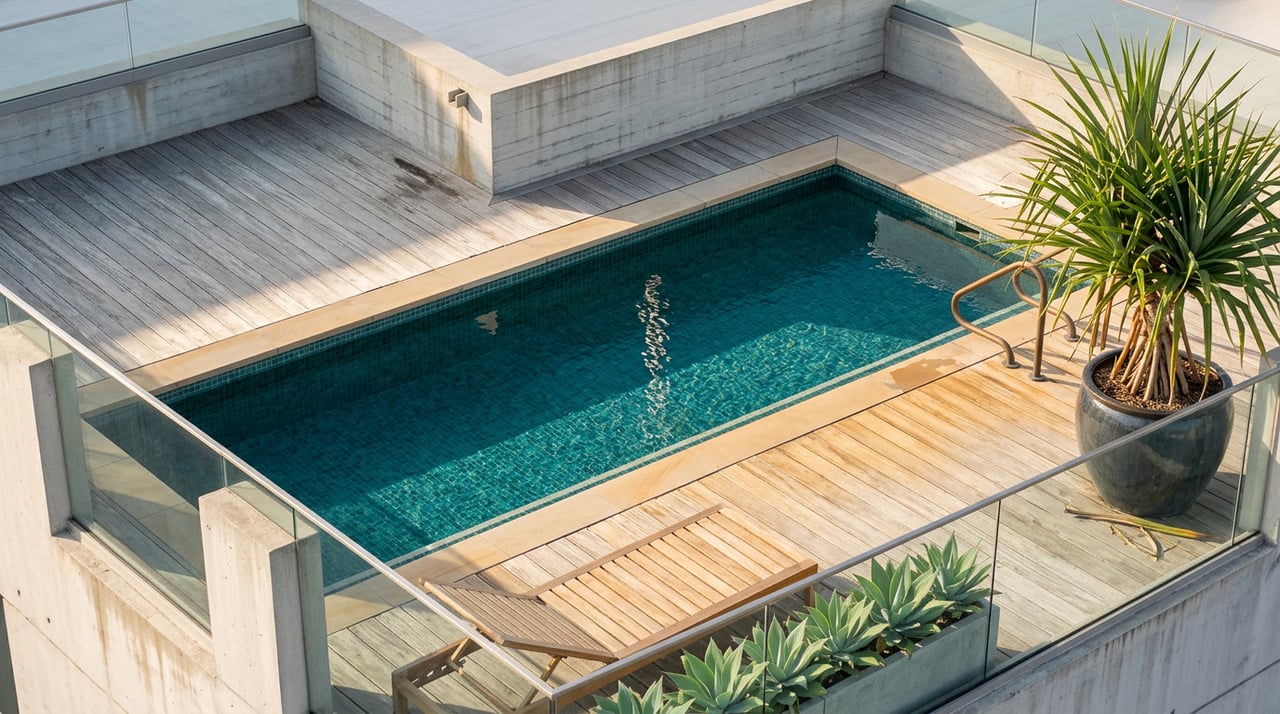
In Miramar, a New Tower Sells Space. In Condado, One Sells Height.
August 27, 2026
August 27, 2026
Ask three different sources when Vanderbilt Residences on Ashford Avenue will actually be finished, and you'll get three different years. One account from 2024 pointed to early 2026. A listing for one of its units, checked as recently as June, says spring or summer of this year. A separate write-up published just months ago puts the delivery date in February 2027. Nobody is lying. The tower is simply the kind of project where the finish line depends on which floor of concrete you're standing on when you ask, and that detail turns out to say something real about what buyers in Condado are actually paying for.
Ten minutes away in Miramar, a different kind of luxury tower broke ground on April 30 of this year. OPUS Miramar and Vanderbilt Residences get lumped together constantly in conversations about San Juan's new luxury inventory, both marketed to the same relocating professionals and second-home buyers, both selling three, four, and five million dollar residences within a few miles of each other. But set their numbers side by side and it becomes clear they are not selling the same product. One is pricing square footage and privacy. The other is pricing altitude. Knowing the difference matters if you're deciding which neighborhood actually fits your budget and your reasons for buying.
OPUS Miramar is the first project built exclusively as residential inside Puerto Rico's Convention Center District, an $80 million undertaking designed by architect Segundo Cardona of SCF Architects and built by CIC Construcion Group. The groundbreaking ceremony brought out attorney Jan Maduro and Verónica Ferraiuoli, executive director of the Puerto Rico Convention Center District Authority, both speaking to the district's shift from a daytime business zone into a place people actually live.
The building holds 40 residences across four tiers, and the published pricing tells you exactly what you're buying at each level:
| Residence type | Size | Starting price | Parking |
|---|---|---|---|
| Veranda | 2,709 sq ft | $3,000,000 | 3 spaces |
| Terrace | 3,467–5,059 sq ft | $3,400,000 | 3 spaces |
| Sub-Penthouse | 5,465 sq ft (half-floor) | not publicly listed | 3 spaces |
| Penthouse | 7,848 sq ft (dual-level, private rooftop pool) | not publicly listed | 4 spaces |
Do the arithmetic on the two published entry points and the Veranda residences work out to roughly $1,107 per square foot. The Terrace units, at their smallest published size, land closer to $980 per square foot. Both numbers describe a building that is charging for room to spread out.
The detail that separates OPUS from a standard luxury tower isn't the finishes. It's the way density is distributed vertically. Lower floors carry the Veranda and Terrace residences on shared floor plates. Climb higher and the building thins itself out: the Sub-Penthouse tier drops to two homes per floor, and the Penthouse claims a full floor for itself, plus a second level, plus a rooftop pool that belongs to no one else. Privacy in this building isn't a matter of which direction your windows face. It's a matter of how many neighbors share your elevator bank, and that number falls as you go up.
Segundo Cardona has also said publicly that most of OPUS's buyers so far are based in Puerto Rico, not the international or mainland buyers many assume make up the bulk of San Juan's luxury pipeline. If that pattern holds through the remaining pre-construction sales, it says something about who the Convention Center District's first residential tower is actually built for: people who already live here and want more space inside the city, not buyers shopping the island from abroad.
Vanderbilt Residences sits at the intersection of Ashford Avenue and Earle Street in Condado, rising 22 stories and 250 feet, which its own marketing correctly calls the tallest residential building in the metro area. Developer Paulson Puerto Rico, led by John Paulson, has put roughly $184 million into the project, with SB Architects handling the exterior and Hirsh Bender & Associates designing the interiors. The tower holds only 66 units against OPUS's 40, but it does something OPUS was never built to do: it puts every resident directly on the Atlantic.
That oceanfront position comes with a structural cost most buyers never think to ask about. The project's own executives have explained that nearly two-thirds of the tower's concrete sits below ground, which means a large share of the building's total investment goes toward foundation work that no resident will ever see or live in. What buyers are actually purchasing, floor by floor, is the visible third of that structure and the view that comes with height on a stretch of coastline where new oceanfront land does not exist.
The pricing reflects it. When the developer first detailed unit pricing in 2024, the range across the tower's 66 residences ran from $3.9 million to $12.9 million. A 3,283-square-foot unit that came on the market more recently is priced at $6,075,000, which works out to roughly $1,850 per square foot. A larger penthouse near 10,287 square feet has been marketed near $22 million, closer to $2,139 per square foot.
Put the two towers next to each other and the gap is hard to miss. OPUS Miramar's published entry points work out to roughly $980 to $1,107 per square foot. Vanderbilt's currently marketed units run from roughly $1,850 to well over $2,100 per square foot, nearly double. That is not a Miramar discount or a Condado markup in the way most buyers assume it. It reflects two different scarcities being sold.
Condado's scarcity is geographic. There is a finite amount of oceanfront land on that strip, and it hasn't grown since the Condado Vanderbilt Hotel first opened over a century ago. Every foot of frontage is already accounted for, so a new tower there is priced against a ceiling set by land that cannot be replicated.
Miramar's scarcity, at least in OPUS's case, is architectural. The Convention Center District has room to build, so the tower competes on what it can offer inside its own walls: larger floor plans, more parking per unit, and a density curve that gets more private the higher you climb. A buyer with three million dollars can walk into a full three-bedroom Veranda residence with three dedicated parking spaces in Miramar. The same three million dollars does not get a foot in the door at Vanderbilt, where the reported entry price already sits nearly a million dollars higher.
Neither approach is the better investment in the abstract. It depends entirely on what the buyer is actually trying to purchase. Someone who wants square footage, a full-size home feel, and easy access to the Convention Center District and Isla Grande Airport has a real argument for Miramar. Someone whose priority is standing directly on Condado Beach, in the tallest residential tower the metro area has, is paying for something OPUS structurally cannot offer no matter how the interiors are finished.
A caution worth sitting with: the three conflicting completion dates for Vanderbilt aren't a red flag exactly, but they are a reminder that pre-construction marketing pages update on their own schedule, not the buyer's. Anyone under contract on either tower should ask directly for the current construction draw schedule and certificate of occupancy estimate rather than rely on whatever date a website last published.
If you've been shopping Miramar and Condado side by side using median price alone, this is the piece that median price leaves out. A Condado median gets pulled upward by projects like Vanderbilt, where scarcity of land drives the entire pricing structure. A Miramar median reflects a mix of century-old homes on Ponce de León and a new tower pricing itself on space rather than shoreline. Comparing the two numbers without knowing which product each neighborhood is actually selling will lead you to the wrong conclusion about which one fits your budget.
Is OPUS Miramar cheaper than Vanderbilt because Miramar is a lesser neighborhood? No. The difference traces to what each building is structurally selling, oceanfront scarcity in one case and interior space and privacy in the other, not to a quality gap between the two neighborhoods.
Does OPUS Miramar have ocean views? The Convention Center District faces the Puerto Rico Convention Center, Condado, and Old San Juan rather than sitting directly on the beach. Buyers prioritizing direct oceanfront should weigh that against Vanderbilt's beachfront position on Ashford Avenue.
If my budget is closer to three million dollars, do I have options in Condado? Based on the pricing Vanderbilt has published, three million dollars sits below its reported entry point. Other Condado buildings and resale inventory may offer different price points, which is worth reviewing property by property rather than assuming one tower represents the whole neighborhood.
Should I wait for Vanderbilt's confirmed completion date before deciding? If timeline certainty matters to your plans, ask the seller's team directly for the current construction schedule rather than relying on any single published date, since the estimates in circulation have varied by close to a year.
Comparing two towers a few miles apart sounds simple until you look at what each one is actually charging for. If you're trying to figure out whether Miramar's space or Condado's shoreline fits your next move, Lynnette Cartagena has spent more than eighteen years watching these two markets price themselves differently street by street. Let's Connect and talk through which one actually matches what you're trying to buy.
Stay up to date on the latest real estate trends.
Partner with a trusted real estate professional who combines deep local knowledge, personalized guidance, and a commitment to helping you achieve your goals.